Back to Main Blog Page
How to Clean Your RV Exterior

How to Clean Your RV Exterior

How to Clean Your RV Exterior

Author: Monica Turner in RV Repairs / Maintenance / Upgrades

07-20-2020

facebook icontwitter iconpinterest iconlinkedin iconmail iconshare icon
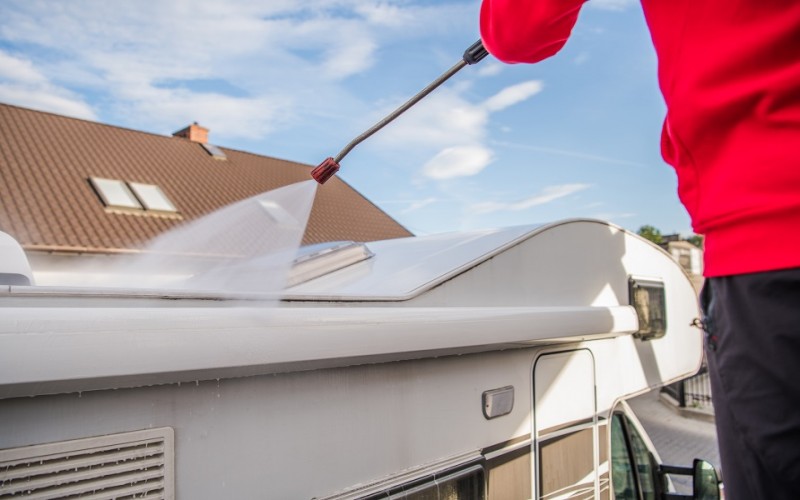
RV’s are BIG. That can make keeping the outside looking clean a much tougher job than keeping the inside clean. But no matter how hard a task to accomplish, it’s an important one. Keeping the outside of your RV clean protects your paint and can help you stay on top of any issues that may arise. It also just feels good to see your home on wheels sparkle in the sunshine! There are several ways to wash your RV’s exterior depending on the amount of time, money, and elbow grease you’d like to put into the project. TRUCK OR RV WASH If you need to wash your RV on a travel day, some truck stops offer washing bays. There are even businesses which offer this service specifically for RVs. Usually, this service is done by hand while you wait. A representative will speak with you about what products will be used on your RV and make recommendations, then your RV will be washed for you! If there are no truck or RV washes around, sometimes a regular car wash will have a bay high and long enough for an RV. Just be sure you can fit before trying, or dirt will be the least of your worries! Prices for this service will vary with the size of your motorhome or trailer and the area of the country, but a fair budget would be around $50. It is usually the quickest of your options. Related read: Spring Cleaning for Your RV DIY Many RVers have an independent spirit and prefer to do things on their own. It’s really not so different from washing your car! Before you wash your RV yourself, make sure that it’s allowed where you are. Many campgrounds don’t permit washing because of the water use involved or the potential for detergents and waxes to harm the area. You can usually find regulations about washing your rig in a campground’s guest guide, but it’s worth checking with the desk to be sure. Gather your tools. You’ll need a water supply, soap, and a soft sponge or rag. Be careful to only use detergents that are safe for your RV’s exterior. You can usually find information on detergents in your rig’s manual. If nothing is listed or you no longer have your manual, check the packaging on the soap you intend to use for the materials it is designed for. Related Read: Natural Cleaning Products for the RV A good bet for most surfaces is blue dish soap. If you have a pressure washer, be very careful around decals, any dents in your exterior, and windows and vents. A hose with a sprayer attachment usually works well. Once you have permission and your supplies, get to work! Spray some water to loosen dirt and bugs, clean it with a soapy rag, and rinse it clean. Be careful not to leave soap on the surface for too long, as it will scale quickly in direct sun. Give yourself plenty of time to get everything into tip-top condition, and don’t be afraid to ask for a second set of eyes on any places you may have missed! Joseph Tymorek, owner of Hottie’s Detailing, a RVingUSA preferred business, suggests that you also wax and polish your RV every six months to protect it from the sun. The DIY route is the least expensive of options, but will require a large investment in time and hard work. MOBILE SERVICE Another option is to hire a mobile detailing service to clean your rig. I asked Tymorek of Hottie’s Detailing why he thinks mobile detailers are the best choice for keeping your RV clean. “You avoid having to go the car wash, wasting valuable time that you could be using to do other productive things – or just relaxing and enjoying your RV!” Mobile detailers are meticulous and experienced in what they do. They will come to your site and ensure that your RV is looking its best and may even catch issues you have overlooked. Even if the campground you are at does not allow you to wash your own RV, there is a good chance they allow mobile detailers (who may use eco-friendly detergents or their own water) to work on site. The campground’s guest guide or some word of mouth advice in their office is the best way to find a mobile detailer. A mobile service may charge $2-$3 per foot for a wash, and will often offer extra services at an additional charge. The price varies by region. A mobile detailer will spend several hours ensuring your RV exterior looks great, but will save you time and effort by coming to you!
Tags:Cleaning, Exterior, Green Living, RV Tips

Leave a Comment

Comments

No comments yet. Be the first to share your thoughts!
Related Blogs

A Guide to RV Sewer Pipe Fittings

A Guide to RV Sewer Pipe Fittings

It is not a common subject of conversation over the campfire to discuss how to hook up your sewage line or how to empty your black tank. Indeed, it's a dirty job, but someone needs to do it. Indeed, changing RV sewer pipe fittings is one of the worst parts of RVing. Whatever sewage hose fittings you choose, top-of-the-line or average, may not seem like much, but it might cost you a lot of money in the long run. Which sewer hose should I buy? If my sewer hose were to burst, what would happen? We'll answer these questions and more about emptying your tank and the best RV sewage hose connections to make the process more manageable. What Are RV sewer pipe fittings? Fittings for RV sewage pipes are made to securely join two pipe sections, preventing sewage or water from escaping. They come in many shapes, sizes, and materials to serve several functions. The most common materials are plastic and metal, favored for more durable applications. There is a wide range of RV sewer pipe fittings Slip joint fittings For RV sewage pipe connections, slip joint fittings are the most common. They quickly set up and properly sealed the joint between the two pipe sections. To unite two pipes of the same size, they are commonly made of plastic. Push-fit fittings Push-fit fittings are frequent in recreational vehicle plumbing systems. They make the process of connecting two sections of pipe quick and easy. Unlike sliding joint fittings, you can use push-fit fittings with many pipe sizes. Compression fittings Compression fittings are usual in RV waste piping systems. They are robust and long-lasting and provide a tight seal between the two pipes. To unite two pipes of the same size, they are commonly metal. Flexible fittings You can join two sections of pipe quickly and simply using flexible fittings. They may join pipes of varying sizes and are of flexible rubber. They are ideal for attaching pipes in tight spaces because they allow for some motion between the two components. Threaded fittings If you want to link two pieces of metal pipe, you should use threaded fittings. They are available in various sizes and materials to meet multiple requirements. They offer a secure and reliable connection between the two sections of pipe. Installation manual for RV sewage pipe fittings Prepare the pipe Before installing the fittings, you must adequately prepare the pipe must. That is part of ensuring the pipe is clean and free of gunk. The pipe must also be the correct size for the fitting being used. Dry fit the fitting Once you have prepared the pipe, you can dry-fit the fitting. That requires attaching the fitting to the pipe without the use of any kind of sealant or glue. The user may then check that the connection is tight and the fitting is the right size. Apply the sealant You should apply the sealant after the fitting has been dry-fitted. That is required to ensure that the connection is watertight. Several types of sealant may require different application techniques, so it's essential to read and heed the manufacturer's instructions. Tighten the fitting When the sealant has dried, you can secure the fitting. You must tighten the nuts on the fitting using a wrench. You can achieve a secure and leak-free connection by properly tightening the fitting. Put the connection to the test When you install the fitting, you must check the connection. Filling the pipe with water and checking for leaks are required. The fitting should be tightened, or reapply the sealant if you find any leaks. RV waste pipe fittings maintenance advice Check the fittings regularly It is essential to conduct routine inspections of the fittings to look for any symptoms of damage or wear that needs fixing. If you use the RV frequently, you should do this more regularly than once a year. If you observe any damage or wear on the fixture, you should replace it as soon as possible. Ensure that the fittings stay clean Just like your RV exterior needs cleaning, so do the fittings. You only need a gentle cloth to wipe away any dirt or dust to accomplish this. In addition, it is vital to check the fittings for any signs of corrosion that could weaken the connection. Use the appropriate fitting When replacing a fitting, using the one most suited for the task is essential. That entails selecting the appropriate dimensions and components for the task at hand. Employing the incorrect fitting could result in leaks or other issues. What should you do if your sewer fitting breaks? If your sewage hose leaks while camping, you may use garden lime or Clorox to kill the bacteria. Please let the office know what happened. They should know what to do because you're not the first to spill something. Offer to pay a professional for any cleaning services you require. For the safety of any pets, children, or other people who could come into contact with the damaged area, kindly do not leave without clearing up the mess. Conclusion When it comes to plumbing, RV sewer pipe fittings are essential to the efficient removal of wastewater from the vehicle. These fittings provide a tight and watertight seal between two separate pipe lengths to prevent any leaks. Because these concepts have many different permutations, it is essential to have a solid understanding of the many kinds of fittings, their purposes, and how to install them correctly. With the help of this detailed guide, you will understand the many types of RV sewage pipe fittings, how to install them correctly, and what steps you should take to ensure that they remain in good working order. Author Bio: Jake Rogers is a passionate RV blogger who has been working for City Movers for two years. With a wealth of knowledge and experience, Jake loves helping RVers enjoy their journeys to the fullest.

Renovating an Old RV or Buying a New One - Things to Consider

Renovating an Old RV or Buying a New One - Things to Consider

If you enjoy the RV life but believe that your current RV is no longer up to the task, it's natural to wonder whether you should purchase a new one or repair it. Making such a choice is difficult. On the one hand, you have a vehicle that can function adequately with a bit of work, but if it's old, it's only a matter of time before it breaks down again. Your old RV may have sentimental value as well. However, if you purchase a new RV, you may have a vehicle that you will not have to worry about for years to come. For this reason, we will talk about renovating an old RV vs. buying a new one and things to consider. You Need To Consider The Price Difference When buying a new RV, one of the most important factors is the price. Most people have a limited amount of money, which restricts how much they can spend, what parts they can buy, and what type of RV they can buy. As a result, most people prefer to buy used RVs or parts. There is one significant difference when it comes to the cost of renovating an old RV vs. buying a new one. If you repair your old RV with new parts, you increase its resale value. On the other hand, if you buy a new RV, its value will plummet as soon as you start using it. This is especially true if you purchase a brand-new RV. If you don't like to feel like you're losing money while exploring the world with your RV, you should consider fixing up your old vehicle. However, if you look hard enough, you may be able to find a newer RV that is still affordable. This is an excellent option if you believe that your renovations may cost you more than purchasing a new one. Consider the Warranty One of the most valuable things you can get out of a new RV is a warranty. While we all love to work on our RV-s from time to time, we can do everything ourselves. If you opt to purchase a new vehicle, the warranty will allow you to relax, knowing that whatever happens, you will have something to fall back on. In most cases, the manufacturer's guarantee will cover the RV for a couple of years. You can also purchase an extended warranty to cover any faults that develop after the original warranty expires when you buy new. You need to keep in mind that if you buy a used RV, which is, as we've mentioned earlier, a lot cheaper, you won't get a warranty. Some bigger dealerships may offer old RVs with a brief 30-60 day guarantee, but most of the time, you're on your own. If you buy a secondhand RV and anything fails soon after, you may need to replace a few things. That is why it's always a good idea to brush up on your repair skills. If you know your way around an RV, you may not even need a warranty. In that case, you should make sure to improve the storage situation in your RV. You will need to add some more space to have all the necessary tools to do the job if you run into unforeseen troubles. Manufacturer Assistance If you are thinking about renovating, you need to think about how hard it will be to get your hands on the parts you need. Parts for older, secondhand RVs might be more difficult to come by in certain circumstances. Over the years, there have been many RV manufacturers, and some may not exist anymore. This may make repairing problems very tough if you have a very old model. If you're thinking about buying a used RV, be sure it's from a reputable brand that's here to stay. If you are purchasing a used RV and are unaware of where the RV comes from, you may also inquire about the prior owner's experience with the manufacturer. This might get you essential information about how easily you might be able to seek help from them in the future. Ownership Duration The amount of time you plan to keep the RV is something else that should be considered when deciding between purchasing a new RV and renovating an older model. If you intend to keep the RV for an extended time, you should probably buy a brand-new one. This is because you should not be concerned about the RV's value declining if you are planning to purchase it to use it for an extended period. On the other hand, if you find that you get bored easily with the same RV setup, renovating might be a better choice for you. In the long run, doing so will save you money on depreciation, and if you ever choose to sell, you will be able to do so for a higher price. Renovating An Old RV Vs. Buying A New One - Conclusion The main thing that you need to consider is your personal preference. There are people out there who want to make a home out of their RV. For them, an RV is more than just a vehicle, and the value is something intangible. On the other hand, other people find that comfort is the only important factor. These people won't care if they drive a secondhand, new, or renovated RV. For them, everything goes, as long as it's comfortable. Hopefully, you will find this article on renovating an old RV vs. buying a new one useful. Author Bio: Since the company's inception, Peter Jacobs has worked for Orange Mover as a content writer. Because he enjoys being outside so much, he tries to put as much time as possible in his RV. When he's not writing about moving, his favorite thing to do is write about traveling and finding new places.

Does My RV Roof need a Bed Liner?

Does My RV Roof need a Bed Liner?

If you love RVing, then you must know the importance of a good and sturdy RV roof and why it needs proper maintenance. Without a properly maintained RV roof, then all sorts of things can happen. Think of the RV roof as you would the roof of your house. For some, an RV provides short-term accommodation when traveling, but for many others, it is their primary residence. The RV is more than a vehicle - it combines the features of a vehicle and a house. Inside it, you’ll find some home amenities like a bathroom, kitchen, and beds. All these amenities, plus those on board are under the RV roof. This roof is strong and durable - but you can make it last longer by covering it with a bed liner. Why your RV roof needs a bed liner To offer protection Your RV is like your second home, or in some cases your only home, and you should do anything to protect it. An RV’s roof is always at greater risk of corrosion, dust, scratches, and other damage. In time, these small damages could destroy the roof completely, making it susceptible to leaking which will force you to do a costly repair or replacement. However, a bed liner can offer great protection to your RV roof. The most preferred bed liner is the spray on-liner. It creates an air-tight seal on the RV roof that prevents contact between the painted roof and loose materials like water, sand, and dirt. This way, your RV roof could serve you for a lifetime. To make your RV attractive Being your first or second home, you must make your RV eye-catching. The problem is that most people focus on beautifying other parts of their RV and forget about the roof. The bed liner enhances the aesthetics of your RV making it have a sleek, well maintained look. This gives you the confidence to camp at any place you want. Besides, you will always be proud of your RV and you can always invite your friends to come and spend some time with you or go camping together. To increase the resale value of your RV At some point, you may need to sell your RV for various reasons - perhaps to upgrade to a better one. However, no one will be willing to buy an old and dull-looking RV at a high price. It is either you will sell it at a bottom price or you keep it to yourself. This is why you need a bed liner for your RV - to increase its resale value. The bed liner covers the roof of your RV thus protecting it against small damages, dents, scratches, and the elements. Hence, it will be easier for you to find a buyer for your RV if it’s well coated with a bed liner. Besides, you will be in a position to quote a higher price. To increase comfort Climate changes can affect your comfort when you are camping in your RV. For instance, during summer, it can be unbearably hot inside the RV. However, an RV roof covered with a bed liner offers a measure of insulation against the weather making for a more comfortable ride. The bed liner will also offer insulation during the winter months. This will also increase energy efficiency. If your RV has been in use for a long period, or if you hire one that has seen better days, then the roof may be compromised. A bed liner will help you cover the compromised RV roof thus keeping you safe and comfortable. Types of bed liners Now that you know why your RV roof needs a bed liner, you have two choices to make with regards to the best bed liner for your RV. There are two main types of bed liners; Spray-on bed liners This is the best and easiest to apply bed liner on your RV roof. Although it is quite expensive compared to a drop-in bed liner, it offers better protection and is more durable. It is also more flexible and can be applied to other parts of your RV. However, before applying spray-on liner on your RV roof, you need to prepare the surface well. This is why it is recommended that you hire a professional to do the job for you. Drop-in bed liners This is also a good coating for trucks but may not be the best for an RV roof. Drop-in bed liner can easily be installed and does not require intense surface preparation like a spray-on liner. You can easily take it off whenever you like. If you decide to choose a drop-in bed liner for your RV, make sure you choose the right size that fits well on the roof. Also, keep checking to ensure there is no water or any liquid stuck between the RV roof and the bed liner as it will cause the roof to rust. Ensure it is tightly held on the RV roof so that it does not move back and forth causing scratches to your RV roof. Conclusion Your RV roof needs a bed liner for protection against scratches, corrosion and weather damage. The liner also makes your RV more attractive and also increases its resale value. Spray-on bed liners are the best for covering your RV roof compared to drop-in bed liners. They are flexible, easy to install, and durable. However, adequate surface preparation is mandatory for the best results. Also, calling in a professional to help you apply the bed liner on your RV roof is recommended.